The 3-Phase Zoho One Implementation Plan: A Strategic Approach to a successful Business Transformation

Implementing Zoho One across your organization can feel overwhelming. With over 45 applications available, where do you even begin? Many businesses make the mistake of trying to deploy everything at once, leading to user confusion, poor adoption, and ultimately, project failure.
The solution? A strategic, phased approach that prioritizes problems over features and focuses on early wins to build momentum. In this comprehensive guide, we’ll walk you through a proven 3-phase Zoho One implementation methodology that has helped hundreds of businesses successfully transform their operations with Zoho One.
Understanding Zoho One: The Operating System for Business
Before diving into implementation strategies, it’s crucial to understand what Zoho One truly represents. Zoho One isn’t just a collection of business applications—it’s a complete operating system designed to power your entire business ecosystem.
Think of it as the foundation that connects every aspect of your organization:
- Customer relationship management
- Financial operations and accounting
- Human resources and team collaboration
- Marketing and sales automation
- Project management and productivity tools
- Business intelligence and analytics
This comprehensive suite addresses the three most common challenges businesses face today:
The Triple Challenge: Abundance, Curiosity, and Complexity
1. Abundance: Too many software options create decision paralysis 2. Curiosity: The desire to try every new feature without strategic focus 3. Complexity: Integration nightmares between disparate systems
Zoho One solves these challenges by providing a unified, integrated platform. However, successful implementation requires a structured approach that prevents overwhelming your organization with too much change at once.
The Strategic 3-Phase Implementation Methodology
There’s no one-size-fits-all approach to Zoho One implementations, but certain best practices consistently lead to success. Our 3-phase methodology focuses on identifying core problems, mapping solutions, and securing organizational buy-in before full deployment.
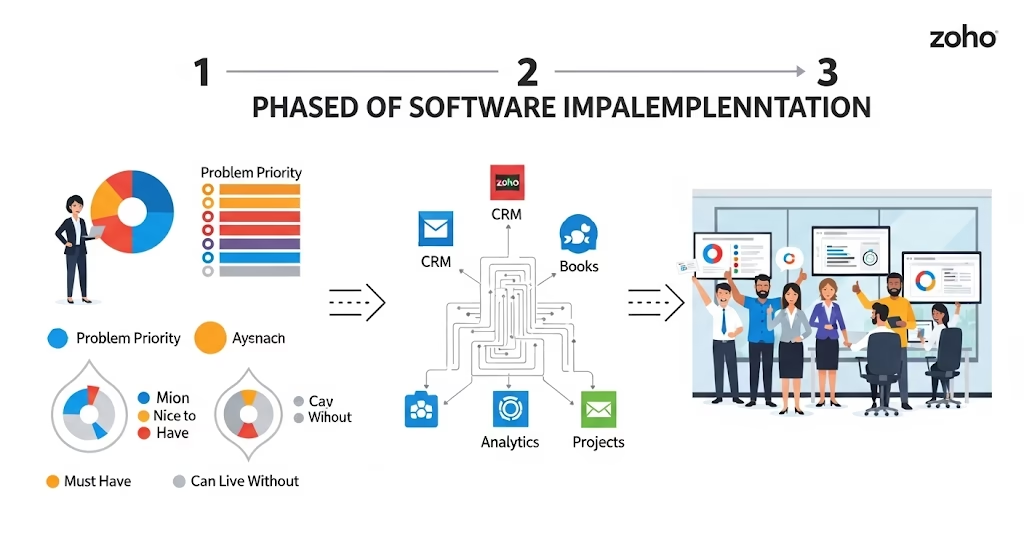
Phase 1: Identify Core Problems and Prioritize Solutions
Timeline: Few days to one week
The foundation of any successful Zoho One implementation starts with honest problem identification. Skip this phase, and you’ll find yourself deploying applications that look impressive but don’t address real business needs.
Step 1: Problem Categorization Framework
Use this three-tier prioritization system to categorize your business challenges:
🔴 Must Solve (Critical)
- Problems that directly impact revenue or customer satisfaction
- Compliance issues or security vulnerabilities
- Daily operational bottlenecks affecting productivity
🟡 Nice to Solve (Important)
- Process improvements that would increase efficiency
- Features that would enhance user experience
- Automation opportunities for repetitive tasks
🟢 Can Live With (Wishlist)
- Advanced features for future consideration
- Nice-to-have integrations
- Experimental or innovative solutions
Step 2: Visual Problem Mapping with Onion Diagrams
Create visual onion diagrams to map your requirements in concentric circles:
- Inner Circle (Must Have): Core applications essential for business operations
- Middle Circle (Nice to Have): Applications that would improve efficiency
- Outer Circle (Can Live Without): Advanced features for future phases
Step 3: Application-to-Problem Mapping
Based on typical business needs, here’s how core Zoho applications often map to priorities:
Must Have (Inner Circle)
- Zoho CRM: Customer relationship management and sales pipeline
- Zoho Books: Financial management and invoicing
- Zoho Analytics: Business intelligence and reporting
Nice to Have (Middle Circle)
- Zoho Desk: Customer support and ticketing
- Zoho Projects: Project management and collaboration
- Zoho People: Human resources management
- Zoho SalesIQ: Live chat and customer engagement
- Zoho Invoice: Advanced invoicing features
- Zoho Flow: Workflow automation
- Zoho Campaigns: Email marketing automation
Can Live Without (Outer Circle)
- Zoho Social: Social media management
- Zoho PageSense: Website optimization
- Zoho Creator: Custom application development
Step 4: Create Business Workflow Diagrams
Map out your current business processes and identify where Zoho applications can streamline operations. Keep these diagrams simple and focused on core problems you’re trying to solve.
Key Principle: Resist the temptation to overcomplicate. Stick to addressing your “must solve” problems in Phase 1.
Phase 2: Map Applications and Build Your Minimum Viable Solution
Timeline: 1 to 4 weeks
With your problems prioritized and applications mapped, Phase 2 focuses on creating a Minimum Viable Product (MVP) solution that addresses your most critical needs while setting the foundation for future expansion.
The MVP Approach: Start Small, Think Big
Your Minimum Viable Solution should cover all “must have” requirements while leaving room for expansion. This approach offers several advantages:
- Faster implementation and quicker time-to-value
- Reduced complexity and learning curve for users
- Early wins that build confidence and momentum
- Lower risk of project failure or user resistance
Application Deployment Strategy
Phase 2A: Core Foundation (Weeks 1-2) Deploy your “must have” applications:
- Set up Zoho CRM with basic contact and deal management
- Configure Zoho Books for financial tracking
- Implement Zoho Analytics for essential reporting
Phase 2B: Efficiency Enhancers (Weeks 3-4) Add “nice to have” applications that build on your foundation:
- Integrate Zoho Desk for customer support
- Deploy Zoho Projects for team collaboration
- Add Zoho People for HR management
Define Early Success Metrics
Establish clear, measurable goals for your MVP deployment:
- Reduce data entry time by 40%
- Improve customer response time by 50%
- Increase visibility into sales pipeline by 100%
- Streamline financial reporting processes
Well-Rounded Demo Preparation
Create comprehensive demonstrations that showcase:
- How the integrated applications work together
- Real business scenarios and use cases
- Time and cost savings compared to current processes
- Future expansion possibilities
Phase 3: Secure Internal Buy-in and Drive Adoption
Timeline: Varies based on organization size and complexity
Technology implementation success depends on more than just technical deployment. The formula for success is:
Successful Implementation = Technology + (People × Process)
Stakeholder Engagement Strategy
Executive Level Buy-in
- Present ROI analysis and cost-benefit projections
- Demonstrate competitive advantages
- Show scalability and future-proofing benefits
- Address security and compliance considerations
Management Level Champions
- Train department heads to become system advocates
- Provide detailed feature training and best practices
- Establish clear success metrics and accountability
- Create feedback loops for continuous improvement
End-User Adoption
- Involve team members in the selection and customization process
- Provide comprehensive training and ongoing support
- Recognize and celebrate early adopters
- Address concerns and resistance proactively
The Power of Proof of Concept (POC)
A well-executed POC can make or break your implementation. Here’s how to maximize its impact:
POC Best Practices:
- Use real business data, not generic examples
- Focus on solving actual daily challenges
- Include representatives from each department
- Document time savings and efficiency improvements
- Address potential concerns and limitations honestly
Prototype Development with Sample Data
Create working prototypes that demonstrate:
- Data migration from existing systems
- Integration between different Zoho applications
- Custom workflows and automation rules
- Reporting and analytics capabilities
- Mobile access and functionality
Migration Planning: Know the Hiccups Early
Identify and plan for common migration challenges:
- Data quality issues and cleanup requirements
- Integration complexities with existing systems
- User training and change management needs
- Potential downtime and business continuity plans
- Backup and rollback procedures
Real-World Success Story: TechGrow Solutions
To illustrate how this 3-phase approach works in practice, let’s examine TechGrow Solutions, a mid-sized digital marketing agency that successfully implemented Zoho One using our methodology.
Company Background
- Industry: Digital Marketing Agency
- Size: 85 employees across 4 departments
- Challenge: Disconnected systems, manual processes, poor visibility into operations
- Timeline: 6-week implementation
Phase 1: Problem Identification (Week 1)
TechGrow’s Critical Challenges:
Must Solve:
- Client data scattered across multiple spreadsheets
- No centralized project tracking system
- Manual invoicing causing delays and errors
- Poor visibility into team productivity and project profitability
Nice to Solve:
- Limited customer support ticket tracking
- Inconsistent client communication
- Manual time tracking and reporting
- Basic marketing campaign management
Can Live With:
- Advanced social media scheduling
- Sophisticated website analytics
- Custom mobile applications
Their Onion Diagram Result:
- Inner Circle: CRM, Projects, Books, Analytics
- Middle Circle: Desk, People, SalesIQ, Campaigns
- Outer Circle: Social, PageSense, Creator
Phase 2: MVP Implementation (Weeks 2-5)
Week 2-3: Core Foundation TechGrow deployed their must-have applications:
- Zoho CRM: Centralized all client information and communication history
- Zoho Projects: Unified project management across all client accounts
- Zoho Books: Automated invoicing and financial tracking
- Zoho Analytics: Real-time dashboards for project profitability
Week 4-5: Efficiency Enhancers Added nice-to-have applications:
- Zoho Desk: Streamlined client support requests
- Zoho People: Centralized HR processes and time tracking
- Zoho Flow: Automated data sync between applications
Early Success Metrics Achieved:
- 60% reduction in data entry time
- 45% faster project delivery through better tracking
- 50% reduction in invoicing errors
- 100% improvement in project profitability visibility
Phase 3: Internal Adoption (Week 6 and Ongoing)
Executive Buy-in: CEO Sarah Martinez was initially skeptical about changing systems. The POC demonstration showed a 30% potential increase in project profitability through better resource allocation and time tracking. She became the project’s biggest champion.
Management Training: Department heads received intensive training and became internal trainers for their teams:
- Sales Manager: Led CRM adoption and client communication standardization
- Project Manager: Drove Projects application adoption and workflow optimization
- Finance Manager: Championed Books implementation and automated reporting
- HR Manager: Implemented People application for better team management
User Adoption Strategy:
- Conducted hands-on training sessions with real client data
- Created quick reference guides and video tutorials
- Established a buddy system pairing tech-savvy users with those needing extra support
- Implemented a suggestion system for continuous improvement
POC Results That Sealed the Deal: Using three months of historical data, the POC demonstrated:
- 25% improvement in project completion times
- 40% reduction in administrative overhead
- 35% increase in client satisfaction scores
- 20% improvement in team productivity metrics
Six-Month Results
Quantifiable Benefits:
- Revenue Impact: 28% increase in project profitability
- Efficiency Gains: 50% reduction in administrative tasks
- Client Satisfaction: 42% improvement in response times
- Team Productivity: 35% increase in billable hour utilization
- Cost Savings: $45,000 annual reduction in software licensing costs
Qualitative Improvements:
- Elimination of data silos between departments
- Improved collaboration and communication
- Better decision-making through real-time analytics
- Enhanced client relationships through centralized communication
- Reduced employee frustration with manual processes
Sarah Martinez, CEO of TechGrow Solutions, reflects: “The 3-phase approach prevented us from getting overwhelmed. By focusing on our core problems first, we saw immediate value, which made it easier to get everyone on board. Six months later, I can’t imagine running our business without Zoho One. It’s not just software—it’s become our competitive advantage.”
Implementation Timeline and Resource Planning
Typical Timeline Breakdown
Phase 1: Problem Identification
- Duration: 3-7 days
- Resources: Project lead, department heads, key stakeholders
- Deliverables: Prioritized problem list, onion diagrams, workflow maps
Phase 2: Application Mapping and MVP
- Duration: 1-4 weeks
- Resources: IT team, department representatives, external consultant (optional)
- Deliverables: Configured applications, integration setup, testing results
Phase 3: Internal Adoption
- Duration: 2-8 weeks (ongoing)
- Resources: Training team, change management specialists, ongoing support
- Deliverables: Trained users, adoption metrics, feedback systems
Resource Requirements
Internal Team Structure:
- Project Sponsor: Executive-level champion for decision-making and resource allocation
- Project Manager: Day-to-day coordination and timeline management
- Technical Lead: Configuration, integration, and troubleshooting
- Department Champions: Representatives from each business unit
- Change Management Lead: User adoption and training coordination
External Support Options:
- Zoho Certified Partner: Implementation expertise and best practices
- Independent Consultant: Specialized knowledge and objective perspective
- Zoho Support: Technical assistance and guidance
Best Practices for Long-term Success
Avoiding Common Implementation Pitfalls
1. Feature Overwhelm
- Resist the urge to implement every available feature
- Focus on solving specific business problems
- Expand functionality gradually based on user feedback
2. Poor Change Management
- Invest adequate time in user training and support
- Address resistance proactively with clear communication
- Celebrate early wins to build momentum
3. Inadequate Data Migration Planning
- Clean and standardize data before migration
- Test migration processes thoroughly
- Plan for data validation and quality checks
4. Insufficient Integration Testing
- Test all integrations with real-world scenarios
- Validate data flow between applications
- Establish monitoring and error handling procedures
Continuous Improvement Framework
Monthly Reviews:
- Analyze usage metrics and adoption rates
- Gather user feedback and pain points
- Identify optimization opportunities
- Plan incremental improvements
Quarterly Assessments:
- Evaluate ROI and business impact
- Review and update business processes
- Consider additional application deployments
- Assess training and support needs
Annual Strategic Planning:
- Align Zoho One roadmap with business strategy
- Evaluate new features and applications
- Plan major upgrades or expansions
- Review and update success metrics
Conclusion: Your Path to Zoho One Success
The 3-phase implementation methodology provides a proven framework for Zoho One success, but remember that every organization’s journey will be unique. The key is maintaining focus on solving real business problems while building momentum through early wins.
Key Takeaways:
- Start with Problems, Not Features: Identify what you need to solve before exploring what’s available
- Build Incrementally: MVP approach reduces risk and increases success probability
- Invest in People: Technology alone doesn’t drive success—user adoption does
- Plan for the Long Term: Think of implementation as the beginning, not the end, of your Zoho One journey
Your Next Steps:
- Assess Your Current State: Conduct an honest evaluation of your business challenges
- Build Your Implementation Team: Identify internal champions and external support needs
- Start Small: Focus on your most critical problems and build from there
- Measure and Iterate: Establish metrics for success and continuously improve
Remember, successful Zoho One implementation isn’t about deploying every available application—it’s about creating a unified, efficient business operating system that grows with your organization. The 3-phase approach ensures you build a solid foundation while maintaining the flexibility to evolve and expand as your needs change.
Ready to transform your business operations? Start with Phase 1 today by identifying your core problems and mapping them to potential solutions. Your future self—and your entire organization—will thank you for taking a strategic, measured approach to this transformative journey.
Need help implementing Zoho One in your organization? Our certified consultants and premium zoho partner OCTFIS Techno LLP have guided hundreds of businesses through successful transformations. Contact us to discuss your specific requirements and develop a customized implementation plan.
Ready to supercharge your Zoho setup? Start with one or two integrations from this list and gradually build your connected business ecosystem. Need help implementing these integrations? Contact our Zoho experts for personalized guidance. Do ensure to check the zoho partner here. Read more about why you need a Zoho Partner here.
Stay ahead of the curve with our latest insights! We regularly publish in-depth articles, expert tutorials, and comprehensive guides covering Zoho applications and cutting-edge business technologies. From implementation strategies to advanced tips and tricks, our blog is your go-to resource for maximizing your business productivity. The Learning Effort Blogs and discover solutions that can transform your business operations today.
धन्यवाद, ধন্যবাদ, நன்றி, ధన్యవాదాలు, ಧನ್ಯವಾದಗಳು,നന്ദി, આભાર, ਧੰਨਵਾਦ, ଧନ୍ୟବାଦ
감사합니다 | Thank You | ありがとう
Share this content:




Post Comment